

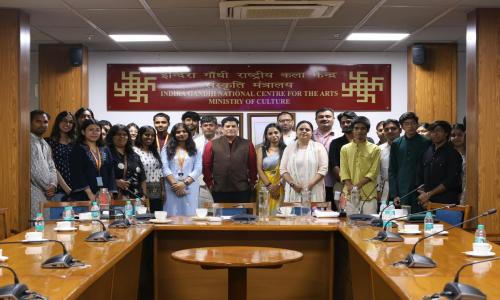
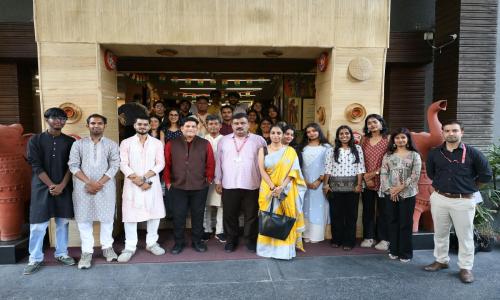
Twenty students and two faculty members of Centre of Excellence – Indian Knowledge System (CoE–IKS), D. Y. Patil International University (DYPIU), Pune, participated in an Immersion Programme at Indira Gandhi National Centre for the Arts (IGNCA), New Delhi, on September 22, 2026. Organised at the Kala Nidhi Division of IGNCA, the programme provided the students with first-hand exposure to India’s rich intellectual, artistic and cultural heritage and to contemporary methods of documenting, preserving and disseminating knowledge resources.
The programme was organised under the leadership of Dr. Abnish Singh Chauhan, Founding Director, CoE–IKS, with the support and encouragement of Prof. Manish Bhalla, Vice-Chancellor, DYPIU. The initiative was designed to extend learning beyond the classroom and acquaint students from diverse academic disciplines with the interdisciplinary character of Indian Knowledge System. DYPIU’s CoE–IKS works to connect India’s intellectual traditions with contemporary education, research and interdisciplinary learning.
The immersion was particularly significant in the context of the growing academic collaboration between DYPIU and IGNCA. Earlier in April 2026, the two institutions had signed a Memorandum of Understanding to promote collaborative research, academic exchange, documentation, preservation and dissemination of Indian Knowledge System, with a focus on Indian art, culture and traditional knowledge.
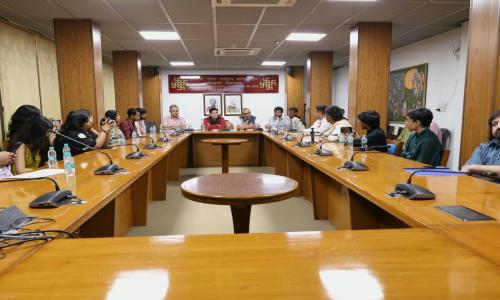
The programme commenced with an Introduction and Welcome Session, followed by an orientation to the work of IGNCA and its various divisions. Prof. Sudhir Kumar Lal, Dean, IGNCA, introduced the participants to the institution’s work in research, conservation, restoration and documentation of India’s cultural heritage. The students were encouraged by Dr K Anil Kumar, HoD, IGNCA to view Indian Knowledge System as a broad and interdisciplinary field encompassing philosophy, arts, literature, science, technology, language and traditional knowledge practices.
An expert session on Indian Knowledge System was conducted through the Kala Kosh, giving the students an opportunity to understand the intellectual and cultural resources preserved and studied at IGNCA. The discussion helped participants appreciate the importance of approaching India’s knowledge traditions through systematic academic research rather than viewing them only as historical or cultural artefacts.
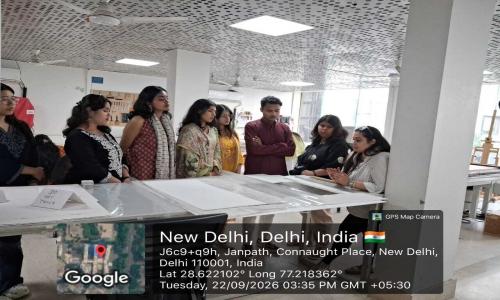
The next session focused on Conservation and Preservation Management. Dr. Achal Pandya, Professor and Head, Conservation, explained scientific techniques used for the conservation and long-term preservation of historical documents and cultural materials. The students learned about physical treatment, documentation and preservation methods employed to protect fragile heritage resources.
The participants were subsequently introduced to prehistoric rock art as an expression of Indian knowledge traditions by Dr. Richa Negi, Head, Adi Drishya. The session explored rock-art traditions, their documentation and preservation, and their significance in understanding early human expression and cultural practices in the Indian subcontinent.
The Slide Unit session, conducted by Shri Virender Bangroo, provided an insight into the visual documentation of Indian art. The participants learned about the importance of systematically recording visual cultural resources so that they can be preserved and made available for future scholarship.
After the tea break, the programme continued with a session at the Manuscript Unit, where Dr. Sarwarul Haque, Assistant Professor and In-charge, Manuscript Unit, introduced the students to IGNCA’s documented manuscript collections. The session highlighted the enormous manuscript heritage of India and the need to encourage younger generations to participate in its documentation, preservation and scholarly study.
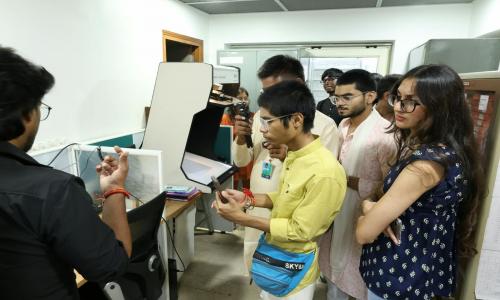
A particularly informative session was conducted by the Reprography Unit on reprography and microfilming techniques for the long-term preservation of manuscripts. Shri Subroto Das, Shri Ashok Dogra and Shri Sanjay explained the technical processes involved in documenting fragile manuscripts and preserving their contents for future generations. The students gained an understanding of how scientific and technological methods can complement traditional heritage-preservation practices.
The participants were then introduced to the IGNCA Cultural Archive by Dr. Shilpi Roy, Assistant Professor, Cultural Archive. The session demonstrated how cultural archives function as multidisciplinary repositories containing diverse forms of knowledge and artistic expression, including music and other intangible cultural resources.
The programme also exposed the students to the growing role of technology in heritage research. At the Cultural Informatics Lab, Smt. Kamana Choudhary, Senior Analyst, introduced participants to the laboratory’s research and applications. The students learned how digital technologies can support the documentation, preservation, organisation and dissemination of India’s cultural heritage.
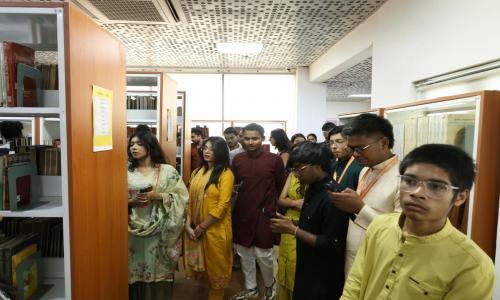
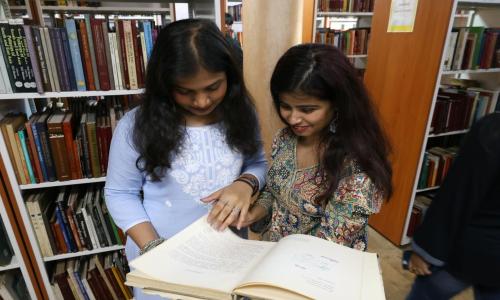
The final part of the immersion took the participants to the Kala Nidhi Reference Library, where Mrs. Sweta Singh, LIO, Reference Library, introduced them to the library’s holdings and services. The students had the opportunity to see rare manuscripts and valuable cultural resources and understand the role of specialised libraries in supporting academic research. A session on Library Automation, led by Dr. Jasbir Singh, Assistant Professor, Kala Nidhi, further acquainted the participants with the technological systems used to facilitate access to and management of scholarly resources.
Alongside the scheduled academic sessions, the visit also created an opportunity for interaction between DYPIU and IGNCA experts regarding future collaborative research. Dr. Garima Sharma, Activity Coordinator and Coordinator, CoE–IKS expressed gratitude to IGNCA for facilitating the educational visit. Dr. Pathik Sahoo, Activity Coordinator, CoE–IKS, discussed possible areas of interdisciplinary collaboration between DYPIU and IGNCA.
The immersion programme brought together students from diverse academic backgrounds, including Liberal Arts, Economics, Media and Communication Studies, Design, Civil Engineering, Engineering Management and Research. This diversity reinforced the interdisciplinary nature of Indian Knowledge System and demonstrated how traditional knowledge can be explored through multiple contemporary academic perspectives.
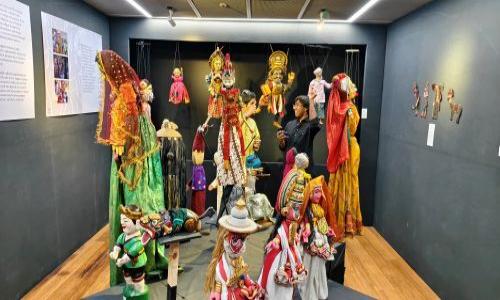
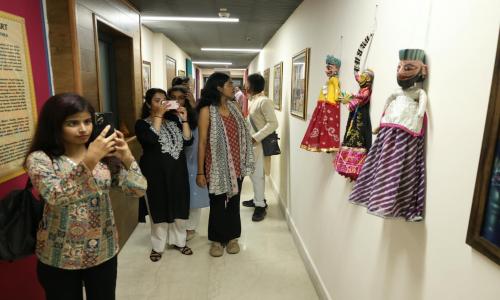
The visit provided students with an opportunity to move beyond classroom-based learning and engage directly with manuscripts, archival collections, visual art, rock art, conservation laboratories, digital cultural resources and specialised library collections. The exposure also encouraged students to consider new possibilities for academic research and professional careers connected with Indian Knowledge System, heritage preservation, cultural documentation and interdisciplinary scholarship.
Speaking on the occasion, Dr. Abnish Singh Chauhan, Founding Director, CoE–IKS, DYPIU, expressed his gratitude to Prof. M. Bhalla, Vice-Chancellor, DYPIU, for providing the students and faculty with the opportunity to participate in the immersion programme. He congratulated Dr. Garima Sharma and Dr. Pathik Sahoo for coordinating the programme and appreciated the students for their enthusiastic participation. He noted that such experiential learning opportunities can play an important role in developing students’ understanding of India’s intellectual and cultural heritage and in encouraging them to engage with IKS through research and contemporary academic frameworks.
The students expressed enthusiasm about the opportunity to observe first-hand the preservation of rare manuscripts, artworks, archival materials and other cultural resources. Their interactions with IGNCA experts helped them understand the scientific, technological and interdisciplinary dimensions of heritage preservation and strengthened their interest in exploring Indian Knowledge System as an emerging field of academic and research engagement.
The IGNCA team appreciated the keen interest shown by the DYPIU students and faculty in India’s knowledge traditions. As a gesture of appreciation, IGNCA felicitated Dr. Garima Sharma and Dr. Pathik Sahoo with mementoes.
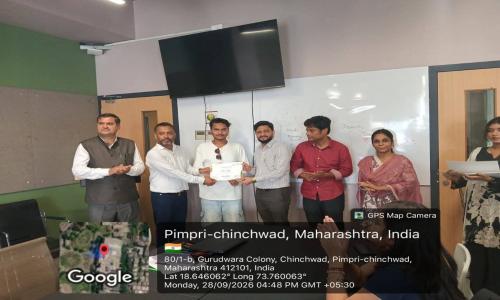
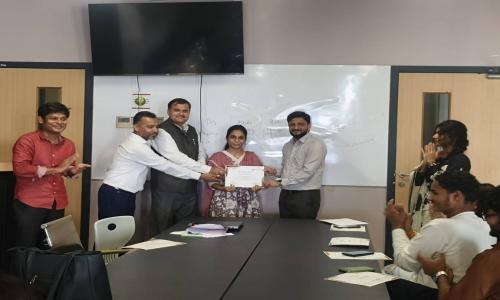
Continuing its efforts to recognise and encourage student engagement with Indian Knowledge System, CoE–IKS, DYPIU, organised a ‘Certificate Distribution Ceremony’ on September 29, 2026, acknowledging the participation and contributions of students associated with the Centre’s activities. The ceremony was graced by Dr. Abnish Singh Chauhan, Director, CoE–IKS, and Dr. Pramod Sharma, Advisory Member, CoE–IKS, while Dr. Ramesh Chandra Pathak attended as the Guest of Honour. The event was coordinated by Dr. Garima Sharma, Coordinator, CoE–IKS, with the support of Dr. Pathik Sahoo, Activity Coordinator, CoE–IKS.
About the Reporter:
Dr. Abnish Singh Chauhan (born 4 June 1979) is a bilingual Hindi-English poet, short-story writer, critic, translator, and editor who has embraced the life philosophy embodied in “Vande Braj Vasundhara.” He edits the Hindi web magazine Poorvabhas and the international research journal Creation and Criticism, and is regarded as one of the pioneers of Hindi Navgeet in the digital space. He also currently serves as a Master Trainer in “Ethics and Storytelling Pedagogy” under the University Grants Commission, Ministry of Education, Government of India.
Keep Reading in Hindi: आईजीएनसीए में डीवाईपीआईयू के विद्यार्थियों ने समझी भारतीय ज्ञान परंपरा